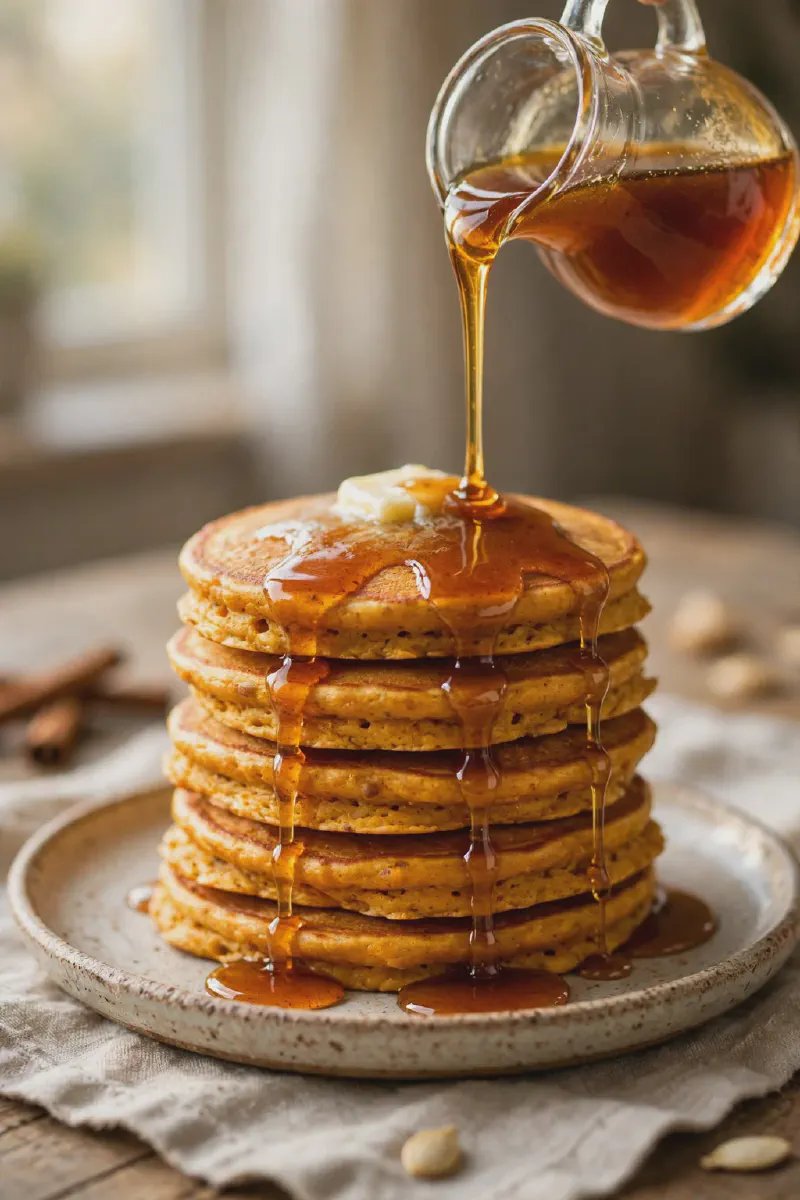
On a regular stack, the syrup is only the pour at the end. In this one it works twice: three tablespoons go straight into the batter, where it takes the place of most of the sugar and carries the spice into every bite, and the rest gets warmed and poured over the stack. The pancakes themselves are a from-scratch batter, the thick, tall kind, orange all the way through from the puree, and the whole thing takes about 32 minutes once the pan is warm, including the 10 minutes the batter sits resting.
The timing breaks down as 10 minutes of prep, 10 minutes of resting the batter with your hands off it, and about 12 minutes at the griddle in two batches. That rest is counted in the total on purpose. It is when the flour hydrates and the baking powder gets a head start, and skipping it costs you height.
The syrup does the seasoning
There is no syrup recipe on this page, and that is deliberate. The syrup is a short simmer of pumpkin puree, maple, brown sugar, and spice, strained fine and finished with vanilla, and the full method lives in the pumpkin spice syrup guide on Bitter and Bright. Make a jar of it before pancake day and it keeps two weeks in the fridge, so the morning itself stays simple: measure three tablespoons into the batter and warm the rest while the pancakes cook.
What the syrup does in the batter is worth understanding, because it changes the mixing math. Syrup is liquid sugar, so the milk stays at 2/3 cup rather than the fuller cup a plain batter would take, and the brown sugar drops to two tablespoons. If you swap the syrup in the batter for plain maple syrup, the pancakes still work, but the spice falls back to whatever the teaspoon of pumpkin pie spice can do on its own, which is noticeably less. One handling note for serving time: warm the syrup gently. On direct heat it goes from warm to scorched quickly once it thins out, so the lowest burner setting and a stir now and then is the whole technique.
A thick batter is the point
Pumpkin puree is a wet ingredient that behaves like a dry one. It brings a lot of moisture but also body, so this batter should look thicker than a regular pancake batter, mounding on the spoon instead of pouring off it. Two things follow from that.
First, use plain pumpkin puree, not pumpkin pie filling. Pie filling arrives sweetened and spiced, and it would double up on both in a batter that is already balanced around the syrup. The can you want lists pumpkin as the only ingredient.
Second, mix it once and stop. Stir just until no dry flour shows, leave the lumps, and let it rest. Every extra stir works the flour and tightens the batter, and tight batter cooks up flat and a little chewy instead of tall. The spice in the dry bowl is pumpkin pie spice; if you keep a jar of the homemade pumpkin spice mix around, this is exactly the job it is for.
At the griddle
Medium heat, and let the pan actually get there before the first scoop goes down. A cold pan gives you pale, greasy first pancakes; a pan that is too hot sets the outside before the thick batter has cooked through the middle, and the centre stays gummy. The variables are your stove and your pan, so treat the first pancake as the tester and adjust the heat, not the batter.
The flip cue is the surface: bubbles across the top and edges that look matte and set rather than wet. Flip once, with a wide spatula in one confident motion, and leave the second side alone for a minute or two. Pressing the pancake down with the spatula is tempting and always a mistake; it squeezes out the rise you just waited for. Finished pancakes hold fine in a low oven at 200°F (93°C) while the second batch cooks, and the syrup warming on the back burner will be ready when they are.
If savoury is more your morning speed, the spicy market style egg pancake goes the opposite direction with the same pan. And on a morning when nobody wants a stack at all, the high protein strawberry ricotta waffle sandwich is the high protein end of the same meal.
Questions that come up
Can I mix the batter the night before? Not the combined batter. The baking soda starts reacting as soon as it meets the wet ingredients, and by morning most of its lift is spent, so the pancakes cook up dense. The better split is dry ingredients in one bowl and wet in another, both covered in the fridge overnight; combining them takes two minutes and the rest still applies.
Does buttermilk work instead of milk? Yes, in the same amount. Keep the baking soda in, because buttermilk’s acid is part of what it is reacting with. The batter runs slightly thicker, so be ready with a spoonful of milk if it will not spread off the scoop.
How do I make these gluten free? Use a 1:1 gluten free flour blend in the same amount, and do not shorten the 10 minute rest; the rest matters more for blends, which need the time to hydrate. Flip gently and give the second side the full two minutes, because the pancakes are more delicate until they are fully set.
Can I freeze the leftovers? Yes. Cool the pancakes completely, stack them with parchment between each one, and freeze in a bag for up to two months. Reheat straight from frozen in a toaster or a 350°F (177°C) oven until hot through, about 5 minutes in the oven. They come back close to fresh, which is more than most pancakes manage.