Ninja Possible Cooker Pro
The one pot this whole recipe is built in, slow cooking the chicken in the peanut sauce and finishing the sauce glossy in the same pot.
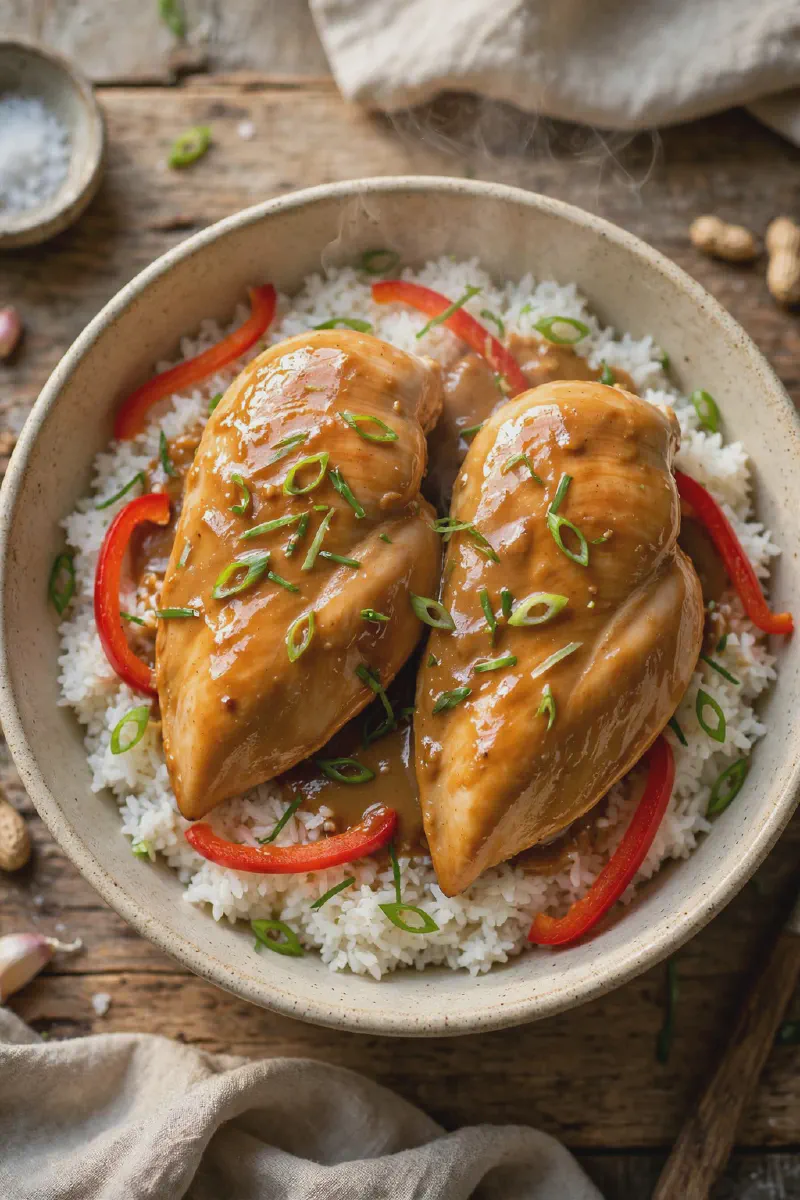
View on Amazon ↗Thai peanut chicken in the Ninja Possible Cooker Pro: tender chicken breasts slow cooked in a creamy coconut peanut sauce with red pepper and carrot, served over rice with spring onions and a squeeze of lime.
As an Amazon Associate I earn from qualifying purchases. Some links in this post are affiliate links. If you buy through one of them, I may earn a commission, and it will not cost you anything extra.
About 30 minutes into cooking this Thai peanut chicken, the house starts smelling absolutely amazing. By the time dinner rolls around, you’re going to be hungry.
This is one of those recipes where you throw everything into the Ninja Possible Cooker Pro, put the lid on, and let it do its thing. Tender chicken breasts, red peppers, and carrots cook in a creamy coconut peanut sauce that is packed with flavour.
Serve it over rice, sprinkle some spring onions on top, and dinner is done. Simple ingredients, minimal effort, and a meal that tastes like you spent way more time making it than you actually did.
The total on the faster setting is 265 minutes: 15 minutes of prep and about 4 hours of cooking on High, almost none of it hands on. On Low it runs about 6 hours instead, for a day when the pot goes on in the morning. Either way it serves 4, generously, over rice.
The recipe gives both SLOW COOK settings because they suit different days. High for 3 to 4 hours gets it done inside an afternoon. Low at about 6 hours stretches it across a workday without asking anything of you in between. The chicken is the guide either way, not the clock: it is done when the thickest breast reads 165°F (74°C) on an instant read thermometer, clear of bone. Chicken breasts vary in size, and a fuller pot runs slower than a half empty one, so check the temperature rather than trusting the timer alone, and do not let it run long past done or the breast meat dries out.
The vegetables ride along from the start. The red pepper softens right down and the grated carrot all but melts into the sauce, which is part of why the finished sauce tastes fuller than its short ingredient list suggests. Peppers that go in at the beginning come out very tender. If you want yours with a little more bite, hold them back and add them in the final 45 to 60 minutes instead. Grating the carrot fine matters here. Thick pieces would still be firm when the chicken is ready; grated strands disappear into the sauce and sweeten it.
The chicken comes out before the sauce finishes, and that order matters. Thickening the sauce with the chicken still in the pot would keep the breasts cooking the whole time, and breast meat held at a simmer dries out. On the plate the chicken rests instead, and the sauce gets the pot to itself.
Stir the cornstarch into the cold water first, never straight into the hot sauce, where it would seize into lumps. Then switch the pot to SEAR/SAUTÉ on High, whisk the slurry in, and simmer uncovered for 5 to 10 minutes, stirring often, until the sauce thickens and turns glossy. When I made this, that one slurry thickened the sauce perfectly. No extra thickener is necessary. Then the chicken goes back in, whole for slicing at the table or cut into chunks that get coated all over, and it only needs a minute in the hot sauce to warm through again.
The rice is the only part of this dinner that cooks outside the pot, and it wants to finish right around when the chicken does, so it goes on in the last hour of the cook. A rice cooker makes that timing effortless, but a lidded pot on the stove works the same. One cup of dry rice gives you roughly three cups cooked, enough to give all four bowls a proper base. Spoon the chicken and sauce over the top rather than stirring them together, so the rice catches the sauce as you eat instead of soaking it all up in the pot.
I first made this with 2 tablespoons of peanut butter, and the peanut flavour came out too mild. The card calls for 4 tablespoons now, and it makes a real difference. Crunchy leaves little peanut pieces through the sauce, smooth gives a silkier finish, and dark roasted gives the strongest peanut flavour of the three. That is the one I reach for.
The sriracha at 1 teaspoon is a background warmth, not a hot dish; double it if your house likes heat, and know that the coconut milk keeps it from running away on you.
Chicken thighs can stand in for the breasts. Boneless, skinless thighs hold up well across the long cook and are more forgiving if the pot runs a little long. Cook them to the same 165°F (74°C) reading before they come out of the pot. Dark meat fans can take thighs to 175°F, where they break into chunks with almost no effort.
A squeeze of fresh lime over the finished bowl brightens the whole dish. The lime wedges on the card are optional, but if you have a lime, use it.
Leftovers keep 3 to 4 days in the fridge, and the peanut sauce tightens up as it sits, so a reheated bowl will look thicker than the fresh pot did. Loosen it with a splash of water or stock and warm it gently, stirring once or twice. Store the rice separately if you can; rice that sits in the sauce overnight drinks it all and leaves the chicken dry the next day. The chicken in its sauce freezes well for up to 3 months. The rice is better made fresh.
Can I use chicken thighs instead of breasts? Yes. Boneless, skinless thighs go in exactly the same way and come out just as tender. Check for 165°F (74°C) in the thickest part before you lift them out, same as the breasts.
My sauce is still thin after the slurry. What now? Give it the full 10 minutes on SEAR/SAUTÉ, stirring often, before you judge it; the thickening lands near the end of that window, and the sauce tightens a little more as it cools.
Can I make it less spicy for kids? Leave the sriracha out entirely. The sauce loses none of its body, just the heat, and anyone who wants warmth back can add hot sauce at the table.
This recipe is part of the Ninja Possible Cooker recipes collection, with the rest of the site’s Possible Cooker Pro chicken dinners in one place. Two more from the same pot: Coconut Lime Chicken and Curry Chicken and Coconut Rice.
The one pot this whole recipe is built in, slow cooking the chicken in the peanut sauce and finishing the sauce glossy in the same pot.
View on Amazon ↗Place the chicken breasts in the bottom of the Ninja Possible Cooker Pro.
Arrange the sliced red pepper and grated carrots over and around the chicken.
In a mixing bowl, whisk together the coconut milk, peanut butter, soy sauce, rice vinegar, garlic, ginger, sriracha, tomato paste, chicken stock, and black pepper until combined.
Pour the sauce over the chicken and vegetables.
Cover and select SLOW COOK. Cook on Low for about 6 hours or High for 3 to 4 hours, until the chicken reaches an internal temperature of 165°F (74°C). Avoid overcooking.
Prepare the rice according to the package or rice cooker instructions, timing it to finish around the same time as the chicken.
Once cooked, carefully remove the chicken and transfer it to a plate.
Mix the cornstarch with 2 tablespoons of cold water to form a smooth slurry.
Switch the cooker to SEAR/SAUTÉ on High. Whisk the slurry into the sauce and simmer uncovered for about 5 to 10 minutes, stirring frequently, until thickened and glossy.
Return the chicken to the sauce, keeping the breasts whole or cutting them into chunks. Gently coat the chicken in the sauce and heat through.
Taste and adjust the seasoning if needed. Add extra soy sauce or sriracha to taste, or an optional squeeze of fresh lime juice.
Serve over rice and garnish with the sliced spring onions.
Per serving
Nutrition is estimated from the ingredients as written and will vary with the brands and swaps you use.
Snap a pic and tag @CookingWithDade—I'd love to see your version. Don't forget to add #CookingWithDade so I can find it.