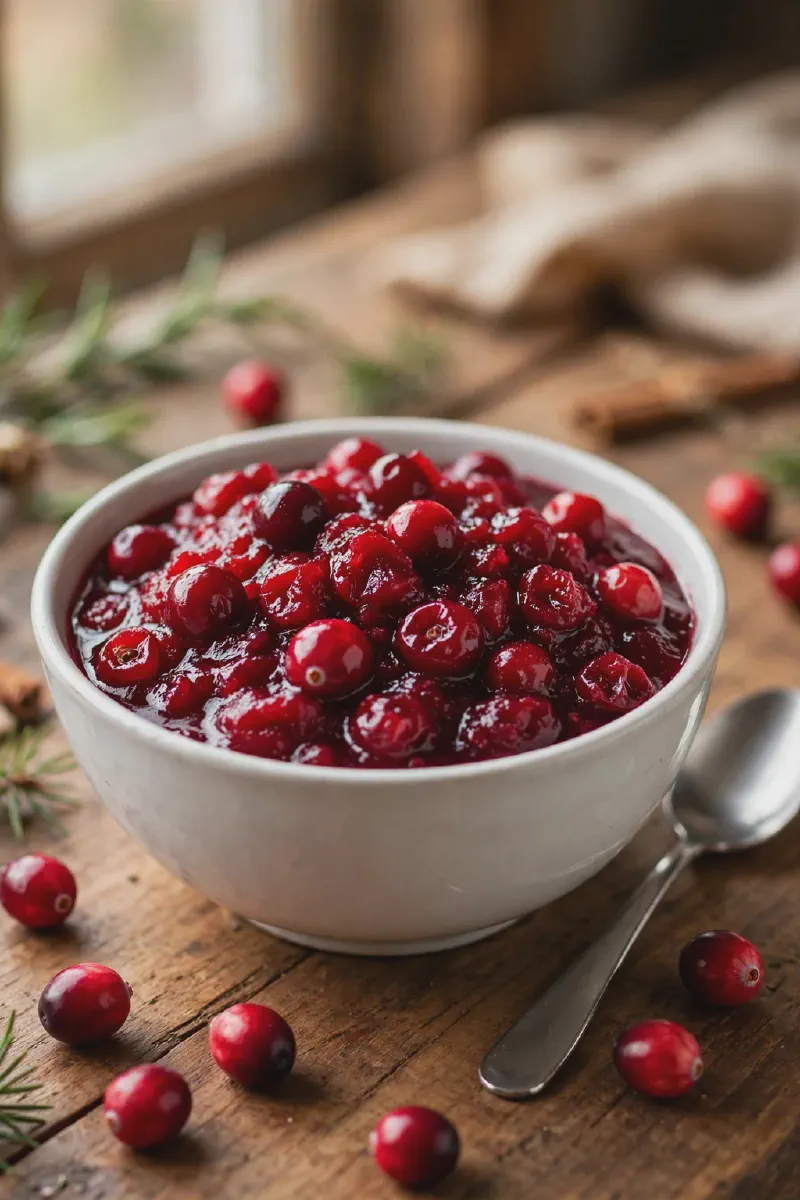
Three ingredients, one saucepan, and about 15 minutes at the stove. That is the whole job here: sugar dissolved in orange juice, a bag of cranberries cooked until they pop, and a sauce that comes out glossy and deep red, with whole berries still visible in it. Nothing gets strained and nothing gets moulded. The berries soften and split, but they do not disappear.
The clock needs one honest note. The stove work is 15 minutes, but the sauce is not ready the second the pan leaves the heat. It thickens as it cools, so the total includes about 30 minutes of cooling: 5 minutes of prep, 15 minutes of cooking, and about 30 minutes of cooling, for a total of about 50 minutes. If you want it chilled, that part happens in the fridge on its own time, ideally as part of making it ahead.
Why orange juice instead of water
Plenty of versions cook cranberries in water and let the sugar carry the flavour. Orange juice does two things water cannot. It is the cooking liquid, and it is also acidity and citrus flavour that sit right against the tartness of the berries, so the finished sauce tastes rounded instead of just sweet and sour in turns. It also means the ingredient list stays at three. There is no zest to strip and no spice blend to measure, because the juice is already doing that work.
Use the orange juice you have. Fresh squeezed and carton juice both work here, since the juice cooks down with the sugar either way. What matters more is the ratio: one cup of juice and one cup of sugar to a 12 ounce bag of berries. That amount of sugar is not there only for sweetness. Cranberries are sharply tart and full of natural pectin, and the sugar balances the tartness while the pectin does the setting as the sauce cools.
Listen for the pop
Once the berries go in, the pan tells you where things stand. First the liquid comes back to a simmer around the berries. Then, a few minutes in, the berries start to pop. You can hear some of them, a soft crack as the skin splits, and you can see the rest: berries opening up, the liquid turning red and glossy, foam settling down.
The cue to work with is most berries popped, which takes 8 to 10 minutes of cooking. A few whole berries holding their shape is fine and keeps the texture interesting. Cooking much past that point breaks every berry down and the sauce turns toward jam, still good, but no longer a whole berry sauce. Stir occasionally rather than constantly. The berries need contact with the hot liquid, not a workout, and gentler handling keeps more of them intact.
Frozen cranberries go straight in from the bag, no thawing. They cool the pan down when they land, so the mixture takes a couple of extra minutes to come back to a simmer before the popping starts. The 8 to 10 minute window is counted once the berries are in and the sauce is simmering again.
It will look loose in the pan
Hot cranberry sauce always looks thinner than it will end up. Pectin sets as the temperature drops, so a sauce that pours like syrup off the spoon at the stove can be properly spoonable after about 30 minutes of cooling in the bowl. Judge the texture cold, or at least cooled, never straight from the pan. If you pull it off the heat at the point where it already looks thick enough to serve, it can set up firmer than you wanted once it cools.
Transfer it to the serving bowl right away rather than letting it cool in the saucepan. It cools more evenly, and the bowl can go straight into the fridge once the sauce is at room temperature. Serve it at room temperature for the softest texture, or chilled for a firmer one.
Make it before you need it
This sauce is better made ahead, and the standard advice to cook it up to 3 days before serving is worth taking. A day or two in the fridge lets the tart edges settle, and it takes one pan off the stove on the day itself. Covered in an airtight container, it keeps 7 to 10 days in the fridge.
Freezing works too. Spoon the cooled sauce into zip-top bags, lay the bags flat, and freeze for up to 1 year. Flat bags thaw fast and stack without taking over the freezer. Move a bag to the fridge the night before you need it, stir the sauce once it has thawed, and it is ready to serve.
On the plate, this belongs next to the turkey and the rich sides, cutting through both. Spoon it alongside the air fryer turkey breast if the oven is spoken for, pass it with a bowl of turkey gravy for the people who want sweet and savoury on the same forkful, and set it near the slow cooker sausage, apple and sage stuffing, where the tartness does the most good against the sausage.
Questions that come up
Can I cut the sugar? A little. Dropping to 3/4 cup still gives you a set sauce, because the pectin comes from the berries, not the sugar, but the tartness steps forward a lot and the sauce reads sharper. Below that, the balance goes. If you do adjust, stir the full amount in at the start; sugar added at the end, off the heat, does not dissolve cleanly and can leave the sauce gritty.
What if it is still runny after cooling? Give it the full cooling time first, and judge it chilled if you can, since it firms up more in the fridge. If it is still loose, put it back in the saucepan and simmer it for 2 to 3 minutes to cook off a little more liquid, then cool it again. The opposite problem is easier: a sauce that set too firm loosens with a spoonful of orange juice or water stirred in.
Can I use water instead of orange juice? Yes, in the same one cup amount, and the sauce will still set and keep the same way. It comes out sharper and plainer, more purely cranberry. A squeeze of lemon juice at the end brings back some of the brightness the orange juice would have given it.
Does it need to be served cold? No. Room temperature is the softest and, to most tastes, the best texture for a whole berry sauce. Chilled, it firms up and slices more than it spoons. Warm is fine too, but reheat it gently and serve it knowing it will look looser in the bowl than it did cold, then set again as it sits.