The Story
The short answer
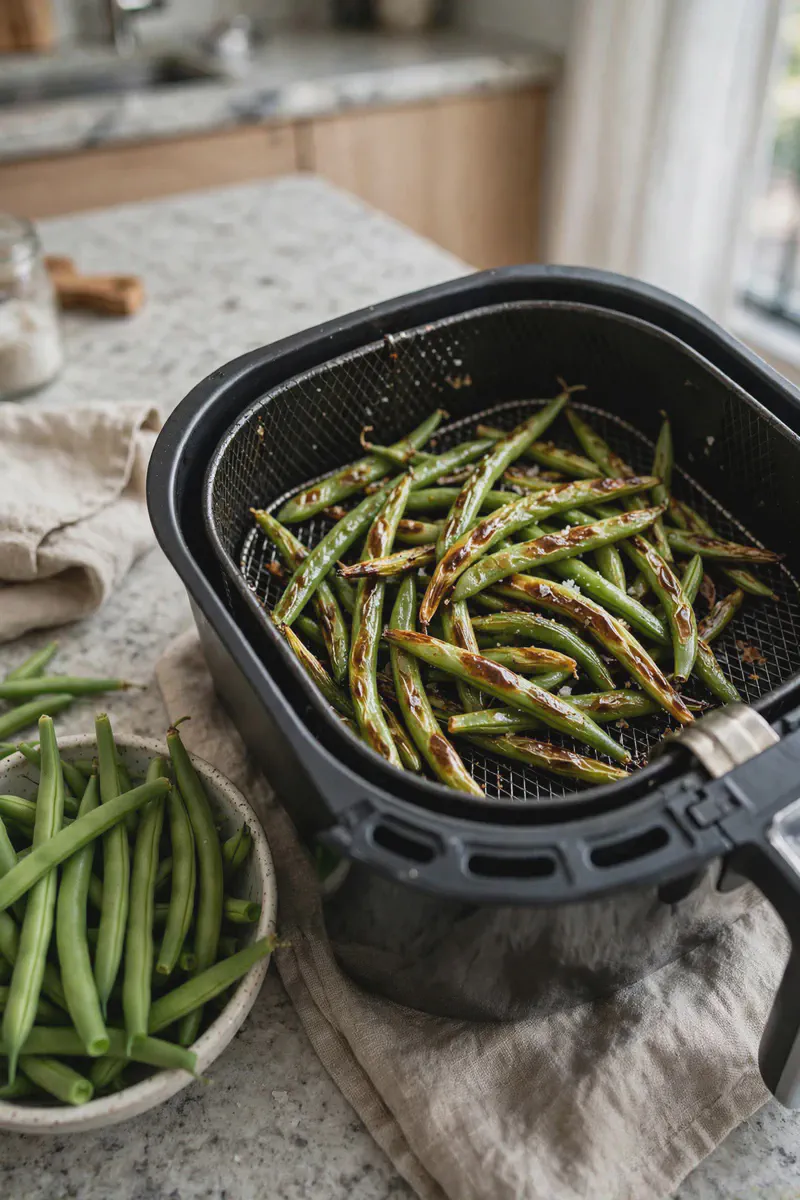
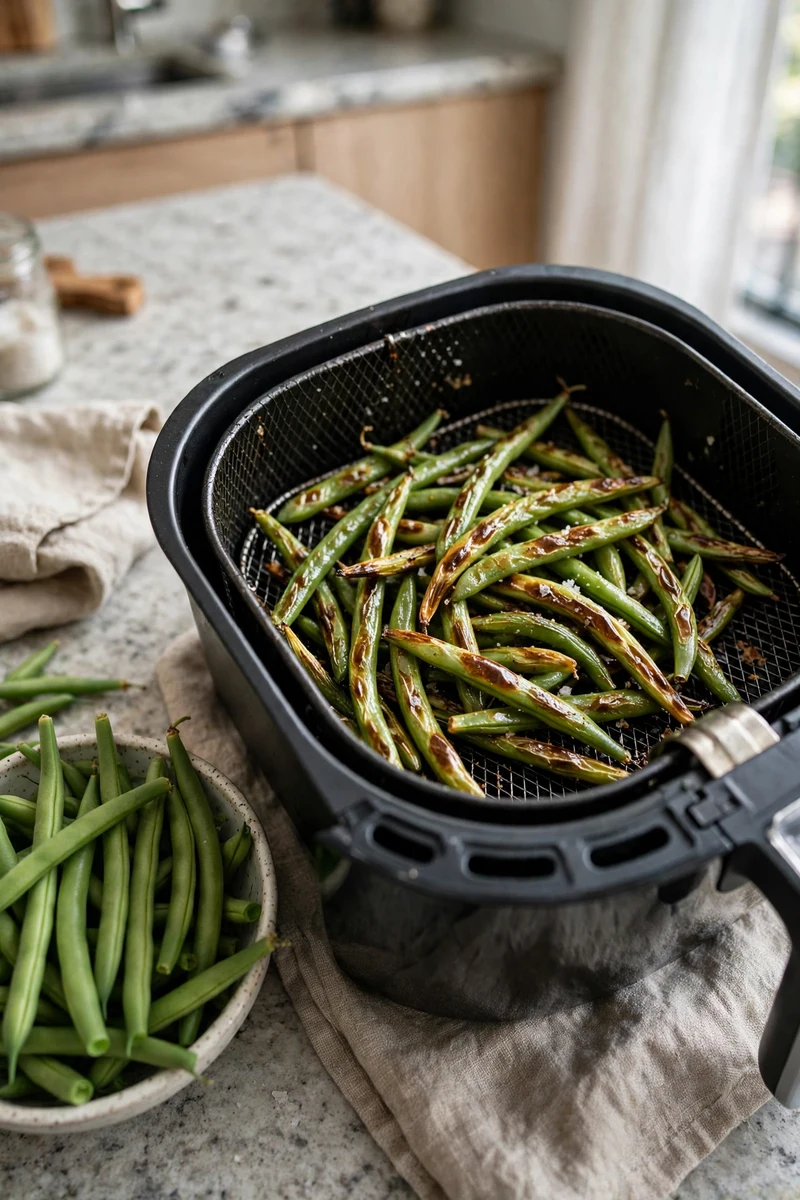
Yes. Trim the stem ends from 1 pound of fresh green beans, wash them, and dry them well. Toss them in a bowl with 2 teaspoons of oil and 1/2 teaspoon of salt, then cook at 400°F (204°C) for 8 to 10 minutes in a loose layer, shaking the basket twice. Thin beans finish in 6 to 8 minutes. Thick beans can need 10 to 12 minutes. Pull them when the skins have brown spots in places and a bean bends easily but still has a little firmness when you bite it.
Green beans are one of the fastest vegetables this machine handles, and that speed is both the point and the risk. There is almost no centre to heat through, so the whole cook is about the surface. Get the surface dry and hot and the skins blister and spot with brown. Send the beans in wet or crowded and they steam in their own moisture and come out limp and pale, no matter how long you leave them.
Start dry, start trimmed
Cut or snap off the stem end of each bean. The stem end is woody and stays chewy after cooking. The pointed tail at the other end is tender and can stay.
Washing is not optional, but the water from washing has to go somewhere other than the basket. Spread the beans on a clean towel and roll them gently, or give them a turn in a salad spinner and then pat them once more. Beans that feel dry to the touch brown. Beans that still carry droplets spend their first minutes boiling that water off, and those minutes are the ones where the blistering should be starting.
Oil goes on in a bowl for the same reason it does with most vegetables in this machine. Two teaspoons looks like very little for a pound of beans, and it is enough, because each bean has a smooth skin that takes a thin coat easily. Season in the bowl too, so the salt lands on the beans and not through the holes in the basket.
Thickness sets the time, not the clock on the box
A bag of green beans rarely holds one thickness. Most hold a mix, with a handful of slender beans among standard ones. That mix is fine at the table, but it helps to know which beans in the basket will finish first so you can judge the batch by the right ones.
| Type | Look | Time at 400°F (204°C) |
|---|---|---|
| Thin French style beans | much slimmer than standard beans | 6 to 8 minutes |
| Standard green beans | the common supermarket size | 8 to 10 minutes |
| Thick beans | wide, mature pods with large seeds inside | 10 to 12 minutes |
Start checking at the early end of the range for your batch. Shake the basket at about 3 minutes and again at about 6 minutes. Each shake moves the beans that sat against the hot base to the top, and brings fresh surfaces down. Beans cook unevenly without those shakes because they settle into a mat that shields the pieces underneath.
Load size matters as well. One pound in a loose layer suits most baskets. The beans will overlap a little, and that is fine, because they shrink as they cook and settle into the gaps. A double load packed in deep is a different thing. The bottom layer steams under the weight of the top one. Cook a large amount in two rounds instead. The second round runs in a hot basket and can finish a minute sooner, so watch it from 6 minutes onward.
What can go on at the start, and what should wait
Salt, black pepper, garlic powder, onion powder, and smoked paprika can all take the full cook at 400°F (204°C). Garlic powder earns its place here. Fresh minced garlic burns at this temperature in this little time, turning bitter before the beans are done. If fresh garlic is the flavour you want, stir it through the hot beans after they come out, with a small knob of butter or a drizzle of oil, and let the residual heat take the raw edge off.
Grated hard cheese waits too. Parmesan tossed on at the start scorches in dark patches. Scatter it over the beans in the final minute, or over the serving bowl, where it softens without burning.
Acid and sweet glazes belong at the end for a different reason. Lemon juice, vinegar, and soy based sauces add surface water, and surface water is what the first minutes worked to remove. A squeeze of lemon over the finished beans brightens them without undoing the browning. The stronger, spicier take in masala sizzled garlic green beans uses a hot pan and whole spices, and it shows how well green beans carry bold seasoning when the timing is right.
Judging the finish by the bean in your hand
Colour tells part of the story. Look for skins that have spotted and blistered in places, with some beans carrying deeper brown patches at the bends. Uniform pale green means the batch steamed. Uniform dark green with no spotting usually means it needs another minute or two.
Then pick up a bean. A done bean bends in a soft curve when you lift it by one end. A bean that still holds itself straight and stiff needs more time. Bite the thickest bean you can find, because that one sets the truth for the batch. It should be tender all the way through with a slight resistance left, not raw and squeaky, and not soft to the point of collapsing.
Pull the basket a touch early if the beans will sit. They keep softening from their own heat on a warm plate, and a side dish that waits ten minutes for the rest of dinner can drift past the point you cooked it to.
Serving them, and the next day
Serve the beans as they are, with an extra pinch of salt at the table. They sit comfortably beside chicken, pork, and fish, and they can fill the green spot on a plate that already holds rice or potatoes. A full holiday treatment looks different, and green bean casserole covers that richer route when the occasion calls for it.
Leftovers keep 3 to 4 days in the fridge in a covered container. They lose their blistered surface in storage, so bring them back briefly rather than gently. Four minutes at 350°F (177°C) in the basket warms them and dries the skins again. The broader method in the guide to reheating leftovers in an air fryer applies, with the beans checked at 3 minutes because they are thin and reheat fast. Cold leftovers also chop well into a grain salad or a frittata filling, where their softer texture stops being a drawback.