The Story
The short answer
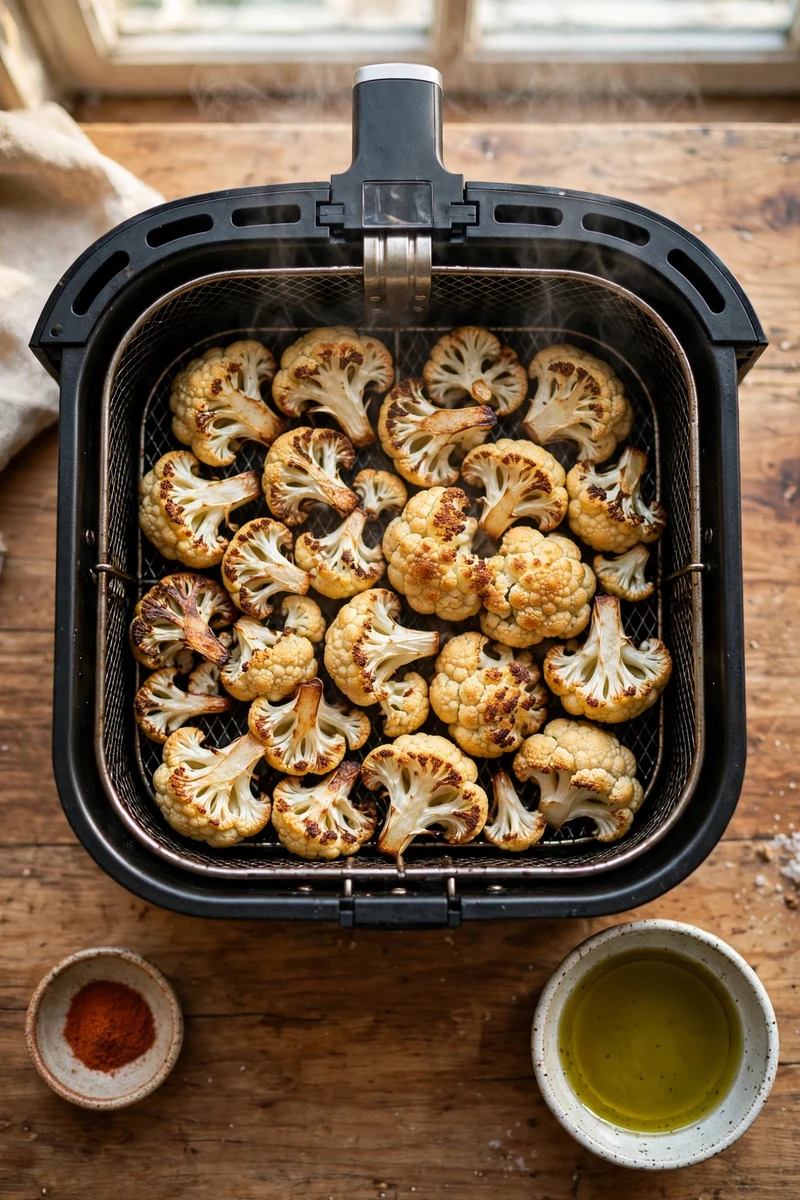
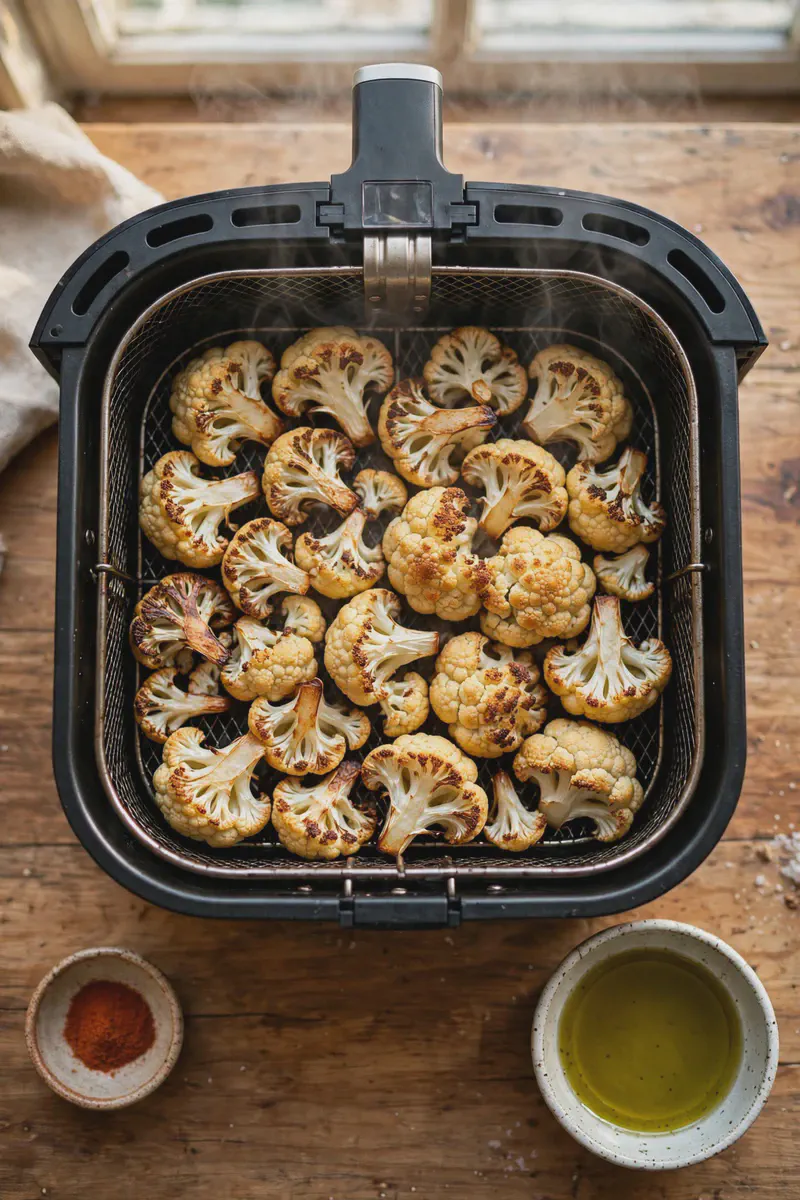
Yes. Cut fresh cauliflower into florets of a similar size, pat them dry, toss them with oil and salt in a bowl, and cook at 400°F (204°C) in one layer. Medium florets take 12 to 15 minutes, with one shake partway through. Small florets finish in 10 to 12 minutes. Large florets need 15 to 18 minutes. The batch is done when the edges and flat sides carry deep golden colour and a knife slides into the thickest stem with only slight resistance.
Raw cauliflower tastes mild to the point of plain, and steaming or boiling keeps it that way. What changes the vegetable is browning. The dry heat in the basket colours the cut surfaces, and that colour is where the sweeter and nuttier flavour comes from. Cauliflower also holds a lot of water inside a tight head, and it gives that water up as it cooks. Most of this guide is really about those two facts. You are trying to brown the outside in the same minutes that the dense stem softens, while the water leaving the florets does not turn the whole batch into steam.
Cut through the stem so every piece has a flat side
Start by pulling off the green leaves and cutting out the thick central core at the base. Then break or cut the head into florets, working from the outside in. Where a floret is wide, slice it lengthwise through its stem. That one cut does the useful work in this recipe. It brings an oversized piece down to the size of its neighbours, and it leaves a flat face on each half.
Flat faces matter more for cauliflower than for most vegetables. A round floret touches the hot basket at one small point and browns in a spot. A flat face sits in full contact with the heat and colours across its whole surface, and it also stays put when you shake the basket instead of rolling. Aim for florets between 1 and 2 inches across, with the stems trimmed so no single piece carries a thick trunk that will lag behind the rest.
The small crumbs that fall while you cut are worth keeping. Toss them in with the florets. They brown fast and end up as crisp little bits scattered through the batch. Just expect them to finish early, and pick out any that look dark when you shake the basket.
Dry florets brown and wet florets steam
Cauliflower hides water in the tight branches of each floret, and a rinse before cooking leaves plenty behind. Spread the cut florets on a clean towel for a few minutes, or pat them dry with paper towel, before any oil goes on. Water sitting on the surface has to cook away before browning can start, and florets that go in wet spend their first minutes steaming in their own moisture. The result is pale and soft rather than coloured and firm at the edges, which is the same problem traced in the guide to why air fryer food turns out soggy.
Once the florets are dry, toss them in a bowl with about 1 tablespoon of oil for 1 pound of cauliflower, plus salt. Tossing in the bowl coats the branches on all sides. Oil poured over florets already in the basket runs down through the branches, coats the tops, and leaves the undersides bare. You do not need much oil for this vegetable. A thin and even coat is the goal, because pooled oil on the basket floor just smokes and does nothing for the colour.
Put dry seasoning on early and sauce on late
Dry seasoning belongs on at the start, while the oil is fresh and sticky. Salt, black pepper, garlic powder, smoked paprika, curry powder, and ground cumin all hold up at 400°F (204°C) for the full cook, and they cling to the oiled surface instead of falling through the basket. Cauliflower takes strong seasoning well because its own flavour is quiet, so a full teaspoon of a spice blend for 1 pound of florets is a reasonable place to start.
Sauces and glazes follow the opposite rule. Anything built on sugar, honey, or maple syrup darkens fast under this heat and can turn bitter before the stems soften. Cook the florets with oil, salt, and dry spices first, then toss them with sauce the moment they come out, while they are hot enough for the sauce to coat and cling. The maple sriracha cauliflower on this site pairs this vegetable with a sweet and hot glaze, and in the basket that kind of glaze works best in this order, tossed onto a cooked batch so it coats the florets instead of scorching on them. Fresh lemon juice and chopped herbs also belong at the end, where their flavour stays bright instead of cooking off.
Leave the basket alone for the first stretch
Load the florets in one layer with a little space between pieces, flat faces down where a piece has one. Then resist shaking for the first 6 or 7 minutes. Browning on that first face needs steady contact, and every early shake breaks the contact and starts the colouring over on a new side. One shake at the halfway point is enough for most batches. It moves the pieces, exposes fresh surface, and lets you check how far the colour has come.
Crowding undoes all of this. Florets piled on top of each other trap the steam they give off, and the pieces underneath stay pale no matter how long the batch cooks. If you have more than fits in one layer, cook in two batches. The second batch runs a little faster in a hot basket, so start checking it a minute or two early. Two batches with colour beat one crowded batch without it.
Frozen florets go in plain, then get their oil
Frozen cauliflower cooks in the basket too, but it needs the order changed. Put the florets in straight from the freezer with nothing on them and cook at 400°F (204°C) for about 5 minutes, until the frost is gone and the surfaces look dry. Then toss them with oil, salt, and seasoning and cook for 9 to 13 minutes more, shaking once, for a total of about 14 to 18 minutes.
Oil added at the start has nothing to hold on to. It slides off the frozen surface as the frost melts and pools under the florets, and the batch steams in that melt water. Even cooked in the right order, frozen florets come out softer than fresh ones, because they were blanched before freezing and carry more water into the basket. That trade is covered in the guide to putting frozen vegetables in an air fryer, and the frozen batch still works well in grain bowls, soups, and any plate where a sauce goes over the top.
Times by size, and how to judge the finish
Heat stays at 400°F (204°C) for fresh florets of every size. Size changes the minutes, because heat has farther to travel into a large stem than into a small one.
| Floret size | Time at 400°F (204°C) | What to check |
|---|---|---|
| Small, about 1 inch across | 10 to 12 minutes | Check at 10 minutes, because small stems soften fast |
| Medium, about 1.5 inches across | 12 to 15 minutes | Shake once halfway and test the thickest stem |
| Large, about 2 inches across | 15 to 18 minutes | Turn large pieces so a fresh face gets the heat |
Read the times as the window where testing should start, not as a promise. A full basket, florets straight from the fridge, and a machine that runs cool all push a batch toward the long end of its row. Colour and the stem test settle the question. Done florets show deep golden edges with some darker tips, and the thickest stem gives under a knife with slight resistance and no raw crunch in the centre. A batch that looks pale but tests tender usually went in wet or crowded, so give it 2 more minutes in a spread out layer rather than turning the heat up.
Serve the florets soon after they come out, spread on a warm plate instead of piled in a covered bowl, where trapped steam softens the edges you just coloured. A squeeze of lemon and a pinch of extra salt at the table wake the batch up without hiding the browning. Leftovers reheat best back in the basket at 350°F (177°C) for 3 to 4 minutes, which dries the surfaces again, and they keep in a covered container in the fridge for up to 3 to 4 days.